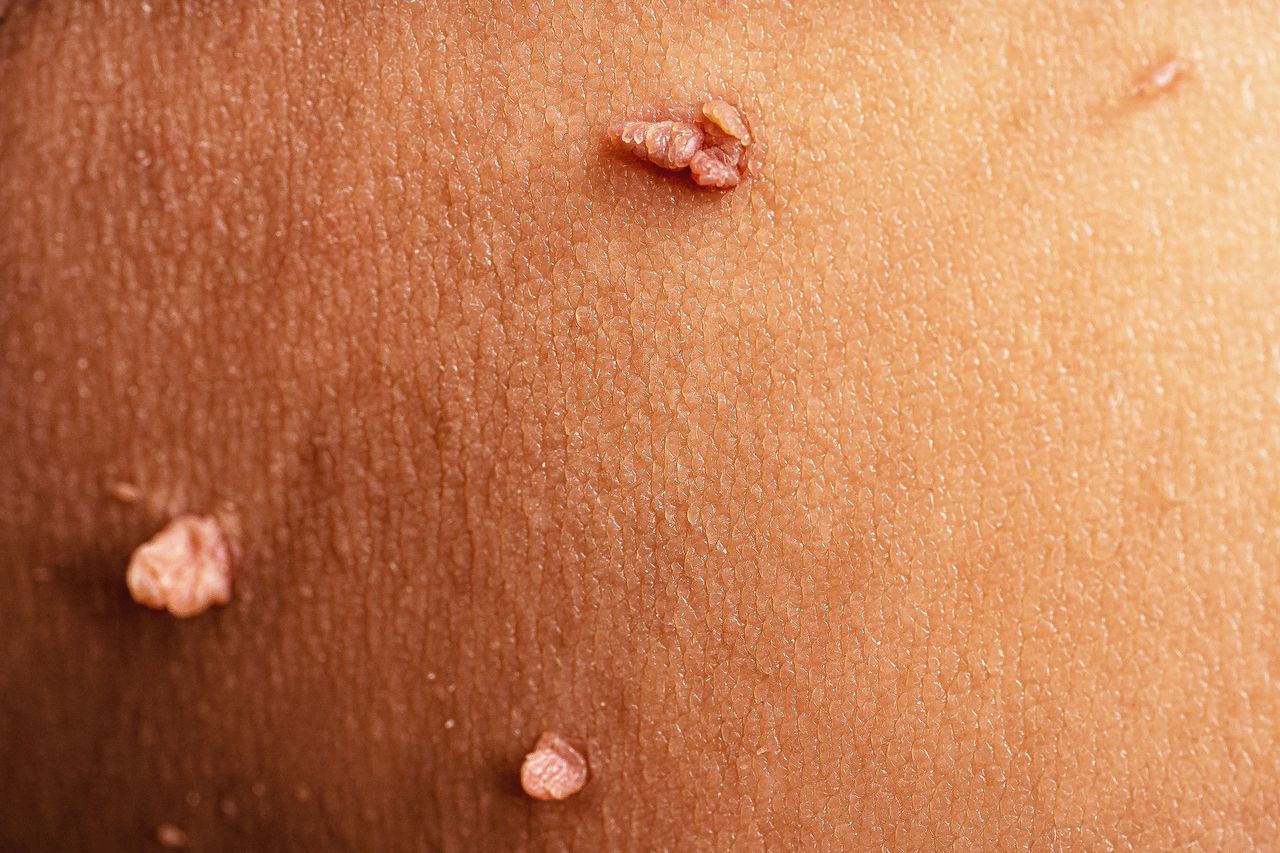
Indications for wart removal
Aesthetic discomfort
Physical discomfort
Spreading warts
Warts that do not respond to treatment
Risk of complications
Warts that cause psychological discomfort
Warts that bleed or are irritated
Where do warts on the body come from?
Warts on the body are the result of infection with the human papillomavirus (HPV). Infection most often occurs through direct contact with the skin of an infected person, but it can also spread through contact with objects that have been touched by an infected person. HPV infection often leads to the development of warts several weeks or even months after exposure to the virus.
It should be noted that HPV is particularly active in damp, warm places such as swimming pools and gyms, and also where the skin is cut or damaged. This is why infections on the feet (verrucas) are so common.
Warts are often confused with other skin lesions, such as fibromas. Fibromas are soft, flexible bumps that develop from skin cells and not as a result of HPV infection. They are benign lesions and are usually not associated with any inflammation.
Verruca removal
Verruca removal is one of the key procedures in dermatology and podiatry. Verrucas, like other warts, are the result of infection with the human papillomavirus (HPV) and often appear on the soles of the feet, which is why they are often called foot warts. Because of where they appear, verrucas can be very inconvenient and even cause pain when moving.
Verruca removal can be carried out using various techniques, such as cryotherapy, laser therapy or surgical methods. The choice of method depends on many factors, including the size and extent of the lesions, as well as the patient's individual preferences. After a verruca has been removed, it is important to follow the doctor's instructions to ensure proper healing and minimise the risk of recurrence.
What are viral warts and what are the indications for their removal?
Viral warts are small, harmless skin lesions caused by the human papillomavirus, also known as HPV. They are most often located on the hands and feet, but can occur on any part of the body. Although warts are usually painless, they can sometimes cause pain or inflammation.
At MM Clinic in Wrocław, viral wart removal is a procedure performed by a doctor who will carefully assess each lesion during the consultation. Our clinic uses modern laser technology to remove lesions. Laser wart removal is a completely safe method that minimises the risk of infection.
What types of warts are there and are they dangerous?
Common warts
Flat warts
Filiform warts
Foot warts (verrucas)
Genital warts (condylomata acuminata)
Surgical wart removal in Wrocław – what does the procedure involve?
Before the procedure, the doctor performing it takes a detailed medical history from the patient and assesses the size of the lesions. The doctor will discuss all available wart removal methods with the patient, such as laser therapy or surgical removal.
The procedure is performed under local anaesthesia, which keeps the patient comfortable during the procedure. The procedure itself takes from a few minutes to around a quarter of an hour, depending on the extent and size of the lesions. After the procedure, a dressing is applied to the site, which the patient changes every few days.
Guidelines after the procedure
After the procedure, the doctor instructs the patient on how to care for the wound properly and avoid infection. It is recommended to avoid intense physical exercise and the sauna for several days after the procedure. Patients are required to attend regular follow-up visits, which allow the healing process to be assessed.
The healing time depends on the size and extent of the lesions. Small warts and verrucas usually heal within 1-2 weeks, while larger lesions may take several weeks to heal fully. A further procedure may be needed to remove the lesions completely.
Laser wart removal in Wrocław
Aesthetic medicine treatments are becoming increasingly popular, and the range on offer keeps growing. At MM Clinic in Wrocław we offer a wide range of aesthetic medicine treatments, including laser removal of warts and other skin lesions. As a leading centre in the field of aesthetic medicine, we focus on state-of-the-art technologies, experienced specialists and an individual approach to every patient.
We believe that healthy and beautiful skin is a key element of our well-being, which is why our specialists do everything they can to provide you with the highest quality of service. We offer a wide range of treatments that can help you feel more confident and satisfied with your appearance. With us, your skin is in good hands. We invite you to explore our full range of aesthetic medicine treatments.
Treatments at MM Clinic