Knowledge base

Drooping eyelids - which aesthetic medicine treatments can improve this problem?

Published · Updated

Drooping of the upper eyelids is a fairly common cosmetic and health problem. Fortunately, aesthetic medicine offers various treatments to address this problem and restore a youthful look to the eyes. In this blog post, we will discuss the various aesthetic medical procedures available that can effectively improve sagging eyelids. Whether they are non-invasive treatments such as botulinum toxin or surgical options such as blepharoplasty, there are solutions tailored to specific needs and desired results. Say goodbye to tired-looking eyes and discover how these innovative techniques can help you regain your self-confidence and achieve a fresher look!

What does a drooping eyelid look like?

Drooping eyelids (ptosis or blepharoptosis) are a cosmetic and health problem that affects many people. It is a condition in which one or both upper eyelids droop and may cover part or all of the eye, which makes it difficult to see. It may be congenital, meaning that the person was born with the condition, or it may result from the ageing process, an injury or a neurological disease, or be a side effect of certain medications.

Causes of drooping eyelids

The problem of drooping eyelids can have a variety of causes. Here is a list of the main factors contributing to this problem. Excess skin: An excessive amount of skin on the upper eyelid can cause it to droop. Weakening of the levator muscle of the eyelid: If the muscle responsible for keeping the eyelid in a raised position weakens, drooping may occur. Autoimmune diseases: Some autoimmune diseases can affect the health and elasticity of the skin around the eyes, which favours the development of drooping eyelids. The ageing process: With age, the skin loses elasticity and firmness, which can lead to natural drooping of the eyelids. Genetic factors: Some people have a genetic predisposition to cosmetic defects. Health problems: Drooping eyelids may also result from musculoskeletal disorders, autoimmune diseases and tumours.

Laser eyelid surgery, or treating a drooping eyelid without a scalpel

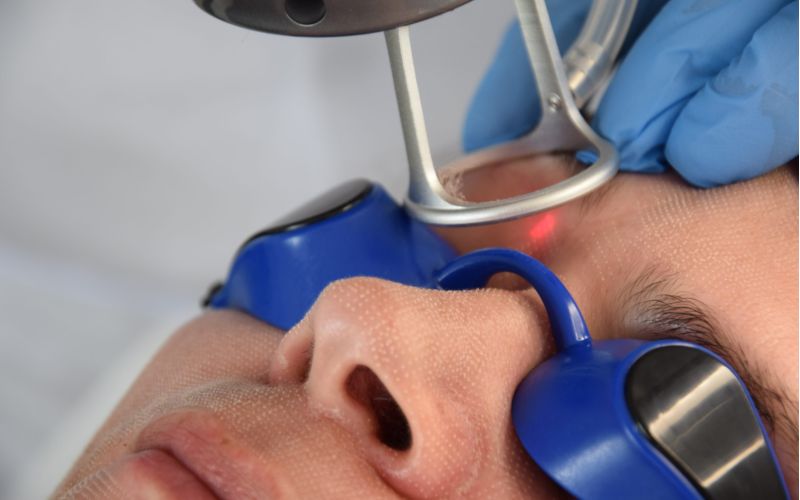
Laser treatment of drooping eyelids is an innovative solution for people struggling with this cosmetic defect. It is a less invasive method that uses a laser to precisely remove excess skin and fat from the upper eyelid. With a laser, energy can be precisely directed to the areas that need improvement. The laser acts on the natural creases of the eyelids, strengthening them while lifting the entire structure of the eye.

Eyelid surgery - treatment with a scalpel

Eyelid surgery is a surgical procedure that makes it possible to lift a drooping eyelid by shortening the levator muscle of the upper eyelid or, in some cases, the frontalis muscle. The procedure involves removing excess skin, which not only makes the eye look larger but also improves visual comfort. In addition, it eliminates "bags" and puffiness under the eyes, which translates into a younger, more rested appearance. With this procedure, the negative effects of the ageing process, as well as genetically determined defects, can be effectively reduced.

What does the procedure involve?

The procedure is performed under local anaesthesia, and the patient remains conscious but feels no pain. The surgeon begins by carefully marking the incision line on the skin of the eyelid. Then, using a scalpel, the surgeon makes a precise incision along this line. Beneath the skin lies the muscle responsible for raising the eyelid, which is usually weakened in people with drooping eyelids. The surgeon shortens this muscle to improve its ability to raise the eyelid. In some cases, it is necessary to remove excess skin or fat. The scars after the procedure are practically invisible because they lie in the natural creases of the eyelids. The whole procedure usually takes 1 to 3 hours, depending on the degree of eyelid drooping and the need for additional corrections.

Botulinum toxin injections for drooping eyelids

One popular way of treating a drooping eyelid is botulinum toxin injections; the toxin acts on the levator muscle of the upper eyelid, which is responsible for raising the eyelid. This treatment helps relax the muscle, which may help lift the drooping eyelid. The treatment is performed under local anaesthesia and is less invasive than traditional eyelid surgery. Botulinum toxin injections are a non-invasive option for treating a drooping eyelid, with many advantages. One of them is minimal recovery time - patients can often return to their normal activities the same day. The procedure is quick, usually taking no more than 30 minutes, and discomfort is minimised thanks to local anaesthesia. Furthermore, the injections do not require a long recovery or post-operative care, which are usually necessary after more invasive procedures such as eyelid surgery. This is why they are an attractive alternative for people looking for an effective but less invasive solution to drooping eyelids.

Benefits of treating drooping eyelids

A drooping eyelid is not only a visual defect but also a health problem. Treating this condition can bring many benefits, both aesthetic and functional. Here are some of the main advantages of treating drooping eyelids: Improved appearance: Drooping eyelids often make the eyes look tired or half-closed. After treatment, a younger and more energetic look can be regained. Field of vision: Drooping eyelids can restrict the field of vision, especially in more severe cases. Treatment allows the eyelids to be lifted to the correct position, which improves visibility. Visual comfort: People with drooping eyelids often experience eye discomfort or fatigue because they have to strain their muscles excessively to lift them. Treatment can relieve these symptoms. Driving safety: If drooping eyelids make it difficult to see the road while driving, treatment is particularly important for safe driving. Psychological well-being: Improving the appearance of the eyes can have a positive effect on self-esteem and self-confidence, which translates into better psychological well-being. Better eye hygiene: Drooping eyelids can make it difficult to close the eye properly during sleep, which leads to dryness and irritation. Treatment helps improve eye hygiene.

Summary

A drooping eyelid is a problem that can be both a cosmetic defect and a hindrance to everyday activities. It can restrict the field of vision and make it difficult to put in contact lenses or apply eye make-up. In some cases, the causes of a drooping eyelid are related to the natural ageing process, during which the firmness of the eyelid skin weakens considerably, causing the eyelids to droop. Sometimes this results in excess skin, which makes the eye look smaller and deepens the effect of the drooping eyelid.

Contact

Book a visit.

Book through Booksy, call reception or send us an email.

Address

ul. Bartłomieja Strachowskiego 32
52-210 Wrocław
Poland

Get directions

Opening hours

Monday - Friday
10:00 - 19:00
Saturday
10:00 - 16:00
Sunday
closed

Book through Booksy, call reception or send us an email.

Book with BooksyCall us: +48 731 731 335Email us: mmclinicpl@gmail.com