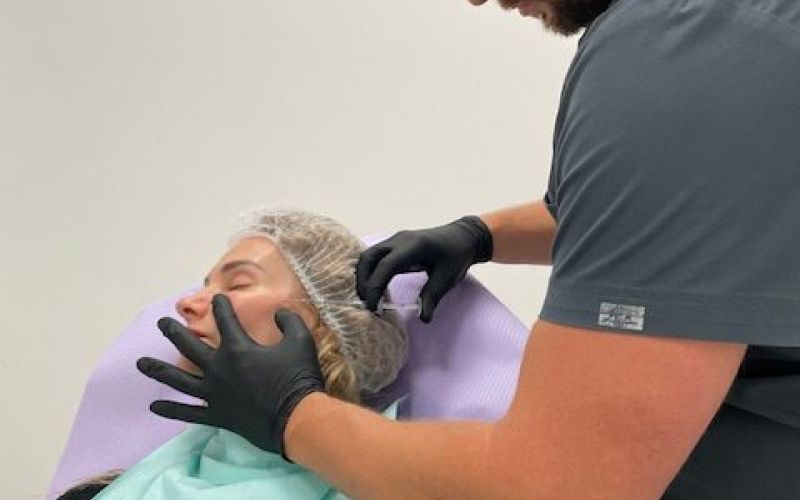
Over time, the skin of the face loses its firmness and elasticity. The volume of soft tissues, such as fat tissue, decreases, which leads to the loss of the natural facial oval. These ageing processes can affect our well-being and self-confidence. Thanks to advances in aesthetic medicine, there are methods that restore a youthful appearance to the face. One of these effective treatments is facial volumetry with hyaluronic acid. It is an excellent option for those who want to improve the facial oval and regain a younger appearance without the need for surgical intervention.
Table of contents
What is facial volumetry?
Facial contouring in aesthetic medicine clinics has become very popular thanks to the simplicity of the treatments, the speed of the results and their safety. Facial volumetry is an innovative treatment in aesthetic medicine that makes it possible to shape the contours of the face without resorting to a scalpel. During this treatment, hyaluronic acid is used to restore the volume of soft tissues and thereby improve the proportions and shape of the face. Hyaluronic acid is a natural substance present in the body that plays an important role in hydrating the skin and keeping it elastic. The products used are safe for health, because hyaluronic acid is a substance naturally present in the skin. Hyaluronic acid is a filling substance that is naturally present in the skin, and its role is to retain water, which contributes to skin hydration. The treatment is safe and effective, and thanks to local anaesthesia it is also comfortable for the patient.Facial volumetry with hyaluronic acid - indications
Facial volumetry with hyaluronic acid is indicated in the following cases: Improving the facial oval - the treatment is aimed at people who wish to give their face a more youthful appearance. Sagging cheeks - the procedure makes it possible to lift and contour the cheeks, which helps restore the proper facial oval. Uneven facial contour - hyaluronic acid, as a substance naturally occurring in subcutaneous tissues, is able to fill minor irregularities and also improve the appearance of the cheekbones. Reducing the signs of ageing - the treatment provides deep hydration of the skin and improves its firmness, which may help maintain a youthful appearance for longer.What does the facial volumetry treatment involve?
Facial volumetry is performed by a qualified aesthetic medicine doctor. Before undergoing facial volumetry with hyaluronic acid, it is important to consult the experienced doctor who will perform the treatment. The doctor will be able to assess the patient's individual needs, recommend suitable products and amounts of hyaluronic acid, and discuss the expected results and any risks associated with the procedure. Next, the area where the treatment will be performed is given local anaesthesia. Once the anaesthesia has taken effect, the aesthetic medicine doctor injects hyaluronic acid into the appropriate places on the face. Precise injection makes it possible to contour the face accurately and restore adequate volume in the areas that need it. The treatment is relatively short and painless, and most patients experience only minimal discomfort, such as slight redness or swelling.Is the treatment painful?
Volumetry is performed under local anaesthesia, so it is fully comfortable for the patient. During the treatment, patients may feel a sensation of tightness or fullness, which is entirely normal with this treatment.What results does facial volumetry give?
Facial volumetry offers many aesthetic benefits, above all improving the facial oval and facial features. By contouring the face and the cheeks, it is possible to achieve a youthful appearance and restore the proper facial oval. The procedure, based on hyaluronic acid - a substance naturally occurring in subcutaneous tissues - makes it possible to fill minor irregularities and lift sagging cheeks, which helps achieve a proportionate and youthful face.Contraindications to the treatment
Although it is non-invasive, facial volumetry has certain contraindications. These include:- Active inflammatory skin conditions
- Autoimmune diseases.
- Pregnancy and breastfeeding.
- Hypersensitivity to hyaluronic acid.
- Taking blood-thinning medicines.
- Uncontrolled chronic diseases.
- Cancers of the skin and other organs.
- Blood clotting disorders.
- A tendency to form keloids and hypertrophic scars.