Are you tired of those bothersome moles and marks that seem to appear out of nowhere?
Laser mole removal may be the solution you are looking for. This procedure uses targeted beams of light to remove unwanted skin growths safely and effectively. But when is it worth considering this treatment? In this blog post we will discuss the factors that make
laser removal of moles a realistic option. Whether you are concerned about their appearance or about the potential health risks associated with these blemishes, we will help you decide whether laser removal is right for you. Say goodbye to those bothersome spots and hello to clear, smooth skin!
When is it worth deciding on laser mole removal?
Moles (naevi) are characteristic skin lesions that can develop at any stage of life. Although they are usually harmless,
there is a risk that they may transform into melanoma, a type of skin cancer. That is why it is worth monitoring moles, especially those with an irregular shape, colour or size.
The decision to have moles removed by laser can be a form of cancer prevention. Remember, however, that some moles, especially pigmented ones or those suspected of being melanoma, may not be suitable for laser removal. In such cases it is always worth consulting a specialist. Considering patient comfort and the speed and painlessness of the procedure, laser removal of moles for health reasons is a solution worth considering.
Aesthetics
There is no denying that a common reason for deciding on laser mole removal is aesthetic. Moles can cause discomfort for many people, especially if they are located on the face or other visible areas of the body. Some people may feel unattractive, insecure and self-conscious because of their moles.
As a result, many of them choose laser mole removal as a way to improve their appearance and boost their self-confidence. Removing moles with a laser allows unwanted lesions to be removed quickly and effectively. The result of this treatment is
smooth and even skin, which clearly contributes to greater comfort and self-confidence. The treatment is minimally invasive and the recovery period is short, which makes it attractive to people who value both health and appearance. Having the treatment performed by an experienced specialist guarantees results and safety.
Removing moles with a laser is a frequently chosen solution that significantly improves quality of life.
Increased risk of skin cancer
An increased risk of skin cancer is also a common reason for removing moles. Although moles are often harmless, they may carry a risk of developing into malignant skin lesions such as melanoma. People with fair skin are particularly susceptible to the harmful effects of the sun's rays, which can have a negative effect on their skin. Your dermatologist may suggest laser mole removal as a form of cancer prevention. Remember that after laser mole removal, histopathological examination of the lesion is not possible. That is why a prior dermoscopic examination and a consultation with an experienced doctor are so important.

Ablative fractional CO2 laser
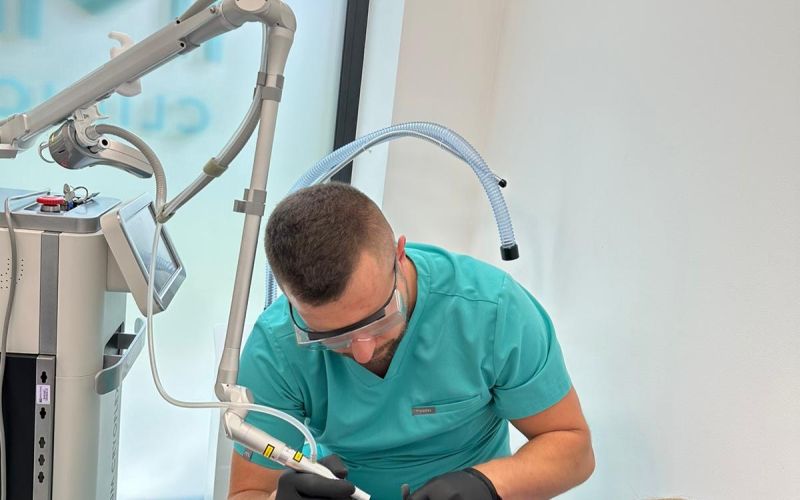
The ablative fractional CO2 laser is an advanced tool that
removes moles precisely. Working non-invasively, it uses a laser beam to precisely lighten and vaporise the skin tissue containing the moles. When a CO2 laser is used, there is no need for traditional surgical instruments such as a scalpel. Laser mole removal with a CO2 laser is safe and precise, focusing only on selected areas of the skin, which minimises the risk of complications and shortens recovery time. Doctors can adjust the intensity of the laser beam to the patient's individual needs, which ensures optimal aesthetic results. As a result, patients can
enjoy smooth, even skin free of unwanted moles, which boosts their self-confidence and improves the appearance of their skin. The ablative laser works by selectively removing tissue, which means that it acts only on specific areas of the skin, leaving the surrounding tissue intact. When the mole is irradiated, the laser energy is absorbed by the pigment contained in the mole, resulting in the gradual breakdown and vaporisation of the mole tissue.
The course of laser mole removal
During laser mole removal, the tissue is vaporised, which leads to effective removal of the skin lesion.
Preparing for the treatment
No special preparation is needed before laser mole removal. You can safely eat meals and take your medications as usual, as long as they are not photosensitising drugs. However, it is always important to consult a doctor before the treatment in order to establish individual recommendations.
The course of the treatment
The laser mole removal treatment itself is relatively simple and non-invasive. Before the treatment begins, the doctor carries out a thorough examination, assessing the type and depth of the skin lesion. Next, to minimise pain, local anaesthesia is administered at the treatment site. During the treatment itself, the doctor directs the laser at the mole, emitting light energy to vaporise the skin lesion. The laser removes the tissue precisely while minimising the risk of injury to healthy skin. The whole process usually takes from a dozen or so to several dozen minutes, depending on the size and type of the mole.
What to do after laser mole removal?
After laser mole removal, the typical recovery time is about two weeks. During this period, proper skin care is important to support the healing process. It is advisable to
avoid exposure to sunlight and to use sunscreen regularly to prevent skin discolouration. In the first days after the treatment, a slight burning sensation and mild redness may occur, which gradually subside. It is also necessary to
regularly wash and disinfect the treated area. Before resuming physical activity, it is recommended to consult a doctor to make sure that the skin has fully regenerated.
Contraindications to laser mole removal Pregnancy: Laser mole removal is usually not recommended for pregnant women because of insufficient knowledge about its possible effects on the foetus.
Active skin infections: If the patient has an active skin infection in the area where the mole is located, the procedure may be postponed until the infection has cleared.
Malignant melanoma: Malignant moles or suspected melanoma are usually a contraindication to laser mole removal. In such cases, an advanced dermatological examination is necessary.
Tendency to scarring: People prone to forming keloids or developing significant scars may not be suitable candidates for laser mole removal.
Acute, poorly healing skin conditions: If the patient has skin conditions such as eczema or poorly healing wounds, the procedure may be postponed until these conditions have resolved or the wounds have healed.
Viral infections: If there are active viral infections, such as herpes or viral warts, laser mole removal may be postponed until these infections have cleared.
Heavily tanned skin: People with heavily tanned skin may not be suitable candidates for laser mole removal. Too high a concentration of melanin in the skin can lead to unpredictable reactions, such as pigmentation or scarring. If the skin is excessively tanned, it is recommended to wait until it returns to its natural state before the treatment is performed.
Blood clotting disorders: People with diagnosed clotting disorders, such as haemophilia, heparin intolerance or clotting factor deficiency, are usually not suitable candidates for laser mole removal. The procedure may increase the risk of bleeding-related complications, so the patient's medical history must be carefully reviewed to assess the safety and feasibility of the treatment.
Is laser mole removal safe? Laser mole removal is considered a safe procedure as long as it is performed by a qualified specialist and with appropriate precautions. When appropriate laser parameters are used and the relevant protocols are followed, the risk of complications is minimal. However, as with any medical treatment, there is a risk of potential side effects, such as temporary redness, swelling, burning or peeling of the skin at the treated site. Although rare, there is a potential risk of scarring, permanent changes in skin pigmentation, infection or allergic reactions after laser mole removal. It is important that before the treatment the doctor properly assesses the patient, takes a medical history and informs them about the potential risks and contraindications. Following the post-treatment recommendations, such as using soothing and protective creams and avoiding sun exposure and products that may irritate the skin, also contributes to the safety and success of the treatment.
Summary Laser mole removal is a modern and increasingly popular method in the field of aesthetic medicine. When is it worth deciding on this treatment? First and foremost, if the moles are bothersome or cause discomfort. This may include moles that are painful, itchy, bleeding or located in places exposed to friction or injury. Moreover, if the moles are aesthetically unacceptable and affect self-confidence, laser removal may be an excellent solution. It is also worth deciding on the treatment if there is a suspicion that the moles may be potentially dangerous, such as melanoma. In any case, before deciding on the treatment, it is best to consult an experienced dermatologist who will carefully assess the condition of the moles and suggest the safest and most effective removal method.