Knowledge base

Mole cauterisation - what is it?

Published · Updated

The topic of mole cauterisation is often a source of many questions and uncertainties. Not without reason - a procedure such as mole removal requires not only precision but also appropriate knowledge and experience. What exactly is the process of “burning off” moles? Which methods are used? Is the procedure safe? And what can you expect after it? In this article we answer these questions.

What is mole cauterisation

Mole cauterisation, or electrocoagulation, is a popular method of removing various kinds of skin lesions. Everything takes place under the close supervision of an experienced doctor, so there is no need to worry about the safety of the procedure. The greatest advantage of this technique is its precision. The doctor has full control over the depth and area of cauterisation, which minimises the risk of scarring. This is why you do not need to worry about possible unsightly effects after the procedure - and that matters to all of us, doesn't it?

Indications for mole cauterisation

The main indications for this procedure are unsightly moles, warts or milia. Another indication for cauterising these lesions is a change in the size or colour of existing moles, or simply physical discomfort they cause, e.g. from rubbing against clothing. Remember, however, that the final decision to remove moles (whether by cauterisation or another method) should be made solely by a specialist! Attempting to get rid of such lesions yourself can lead to serious health consequences.

Is mole cauterisation painful?

The procedure is performed under local anaesthesia, which minimises the sensation of pain. The patient may feel slight burning or warmth, but this is not significant pain, rather mild discomfort.

The main reasons for removing moles

There are two main reasons for removing a mole: health and aesthetics. The health motivation is the most important. Some moles can develop into dangerous skin cancers, such as melanoma. This is why dermatologists often recommend removing them as cancer prevention. Detecting a skin lesion at an early stage can save lives, and mole removal is one of the basic preventive measures. The second, equally important reason is the aesthetic aspect. Many people regard their mole as a cosmetic flaw and would like to get rid of it to improve the appearance of their skin. Sometimes a mole is located in a place particularly prone to injury - for example on the face or neck - which is also an argument for removing it. Whatever the reason, the decision to remove a mole should be carefully considered and discussed with a specialist.

Different methods of mole cauterisation

You are no doubt aware that moles can be not only an aesthetic concern but also a potential health risk. That is why their regular monitoring and removal as soon as any changes are noticed are so important. But which method of mole cauterisation should you choose? There are many methods, and they differ both in the duration of the procedure and in the results afterwards.

Laser mole removal

Laser mole removal in Wrocław involves directing a precise laser beam at the mole, which causes it to vaporise. This procedure is non-invasive, and thanks to the use of the laser the mole is removed with great precision, which significantly reduces the risk of scarring. Surgery Surgical mole removal is the most traditional method. Moles are cut out with a scalpel and the wound is then stitched. This method is often used for larger moles or those at risk of becoming skin cancers. Despite its effectiveness, it may leave visible scars.

When should you opt for a dermatological procedure?

When is the moment when a lesion on our skin should be removed? This is a question that concerns many of us. Of course, there is no simple answer, as everything depends on the specific case. However, there are certain symptoms worth paying attention to. For example, if a mole suddenly changes its shape or colour - this may be a warning sign. Changes in the appearance of your skin are an important indicator and may suggest the need for dermatological intervention. If you have noticed changes in the appearance of a mole, be sure to see a dermatologist, who will assess the condition of your mole and advise you whether it needs to be removed by cauterisation or whether regular observation is sufficient. Do not put off this decision, as it may even save your life.

Safety of cauterisation - what risks does it carry?

Mole cauterisation is a procedure that many people choose to undergo to improve the appearance of their skin. However, like any medical intervention, it carries certain risks. Nowadays, though, science and equipment have developed to such an extent that complications are very rare and are often the result of additional conditions (such as poor blood clotting). The first risk that comes to mind is the possibility of infection. Another aspect is potential scarring after the procedure. We often forget this, but the skin is a living organ and responds to any damage by forming scars. This is a natural regeneration mechanism, and although it can be minimised with modern technology and proper aftercare, the risk of scarring is never zero. Finally, it is also worth mentioning the patient's psychological comfort - fear of the unknown or stress can further reduce comfort during the procedure.

Cauterisation of pigmented moles - what to expect after the procedure and how to proceed?

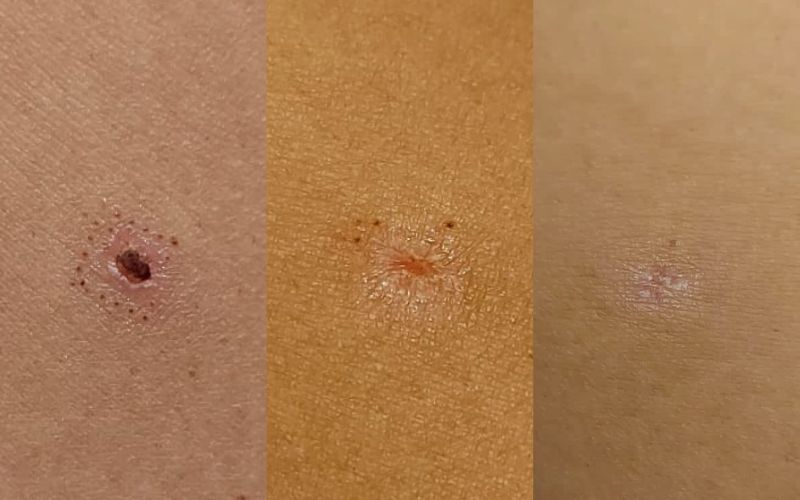
After the removal of skin growths, the patient can expect some degree of discomfort or burning in the treated area. Cauterised moles, especially larger ones, may leave small scars. However, modern techniques such as laser removal make it possible to minimise the risk of scarring. Depending on the method and the size of the mole, healing can take from one week to several weeks. It is important to protect the treated area from the sun and to avoid excessive movement that could stretch the skin and disrupt the healing process. After mole removal, you should regularly monitor your skin for new pigmented lesions. If any worrying changes appear, always consult a doctor. Removing a mole is therefore only one element of taking care of yourself and your skin. Post-operative moles are part of this process, and although they may raise some concerns, what matters most is awareness of and responsibility for your own health.

The mole cauterisation process - stages and procedure

Cauterisation of moles, i.e. skin growths, usually proceeds in several stages. The process begins with a thorough examination of the skin lesion by the doctor to determine its type and size. Then, depending on the size and location of the mole, local anaesthesia may be given to minimise discomfort during the procedure. After anaesthesia, the doctor uses a specialist device - a fractional CO2 laser, which generates a high temperature. This temperature causes the skin lesion to vaporise. This process allows the mole to be removed precisely while minimising the risk of damage to the surrounding skin. Another important element of cauterising skin moles is the sealing of blood vessels. As a result, the procedure causes little bleeding and healing is accelerated. The high temperature causes coagulation of blood proteins, which leads to the closure of blood vessels and prevents bleeding. After the procedure, the area from which the mole was removed is carefully cleaned and dressed to prevent infection. Healing after mole cauterisation usually takes from a few days to a few weeks, depending on the size and depth of the mole.

Do you need to prepare specially for the procedure?

Special preparation for mole removal is usually not required, but there are certain steps that can help ensure the safety and effectiveness of the procedure. Above all, you should inform the doctor about all medications you take, both prescription and over-the-counter, as well as any supplements and herbal products. Some of them, such as anticoagulants, can affect bleeding during the procedure.

Contraindications to mole cauterisation

Although mole cauterisation is a safe and widely used procedure, there are certain contraindications to performing it. For example, if there is a suspicion that a mole may be a cancerous lesion, the doctor may decide on a different type of treatment, such as surgical excision of the mole, to allow a thorough examination of the removed tissue. Another important contraindication is blood clotting disorders. Patients with such disorders, especially those taking anticoagulants, are at greater risk of bleeding during and after the procedure. In such a case, the doctor may choose a different method of mole removal or postpone the procedure until blood clotting has stabilised. In addition, mole cauterisation may not be suitable for people with certain skin conditions that can affect healing, or for people with hypersensitivity to local anaesthetics. Every case is individual, which is why it is important to discuss your medical history and state of health thoroughly with the doctor before the procedure.

Trust the professionals at MM Clinic

Don't wait - take advantage of what MM Clinic in Wrocław offers now! Our clinic offers a range of innovative treatments and medical services of the highest quality. Our team of experienced specialists will provide you with professional care and an individual approach to your needs. Whether you are looking for specialist help or modern aesthetic treatments - at MM Clinic you will find it all in one place. Contact us today and see for yourself how we can take care of your health and well-being. Remember - investing in your health is the best decision you can make!

Contact

Book a visit.

Book through Booksy, call reception or send us an email.

Address

ul. Bartłomieja Strachowskiego 32
52-210 Wrocław
Poland

Get directions

Opening hours

Monday - Friday
10:00 - 19:00
Saturday
10:00 - 16:00
Sunday
closed

Book through Booksy, call reception or send us an email.

Book with BooksyCall us: +48 731 731 335Email us: mmclinicpl@gmail.com