Knowledge base

What are warts?

Published · Updated

Warts are common skin lesions that can occur in people of all ages. These small, raised skin growths may seem harmless, but they can cause aesthetic discomfort and sometimes even physical complaints. Warts are the result of infection with the human papillomavirus (HPV) and are contagious. They can appear on various parts of the body, such as the hands, feet, face or neck. In this article we give a broad overview of warts, covering their causes, symptoms and effective removal methods. We also present the risk factors associated with the development of warts and explain when it is worth consulting a doctor.

Types of warts

Warts are divided into various types, such as common, flat, genital, foot, tongue and seborrhoeic warts.

Common warts

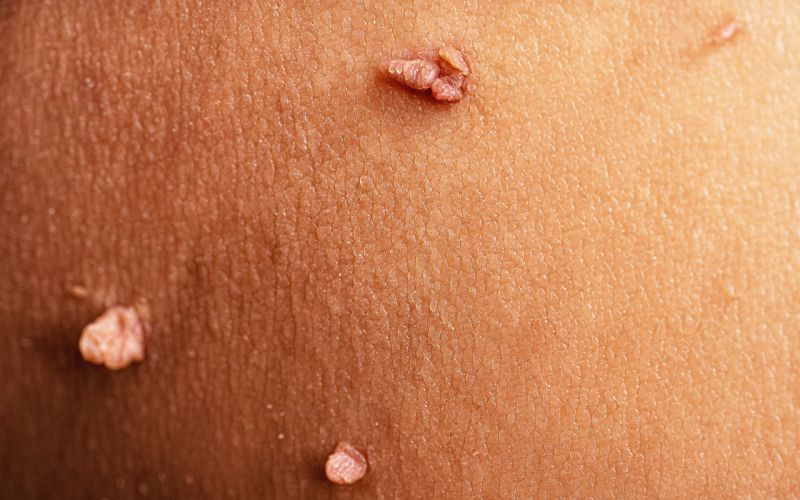
Common warts are small, cauliflower-like bumps that are skin-coloured or slightly darker. They usually appear on the hands, especially around the nails and on the fingers. They are the result of infection with the human papillomavirus (HPV), although they do not pose a serious threat to health. They are, however, contagious and can look unsightly and sometimes cause discomfort or pain. An effective way to remove them is laser wart removal in Wrocław with a CO2 laser - a procedure performed by a doctor, usually during a single visit.

Flat warts

Flat warts are one of the types of skin growths that often appear on the body. They are flat, small skin bumps with a colour close to that of the skin. Sometimes they may have well-defined edges and a slightly altered texture compared with the surrounding skin. Flat warts are often the result of infection with the human papillomavirus (HPV), which is transmitted through direct skin contact. They can appear on various parts of the body, including the face, hands, neck or trunk. If flat warts appear, it is recommended to consult a dermatologist to determine the best way to treat them.

Mosaic warts

Mosaic warts usually have a small, shallow and flat shape, resembling small spots or patches on the skin. They may occur singly or form closely spaced clusters, creating a pattern resembling a mosaic. They can appear on the feet, hands and face.

Filiform warts

Thin filiform warts, also known as filamentous warts, are raised skin growths with a narrow, thread-like shape. They have a delicate structure that can grow vertically from the surface of the skin. They are often skin-coloured or slightly darker. Thin filiform warts, which appear on various areas of the body such as the face, neck or groin, are characterised by thin, protruding skin growths. They most often appear in areas where the skin is thinner, such as around the eyes, nose and lips or in the armpits. They are usually benign skin lesions accompanied by minimal or no pain.

Genital warts

Genital warts, also known as condylomata acuminata, are small skin bumps or pathological lesions on the skin of the genitals. They usually take the form of cauliflower-like bumps with a colour close to that of the skin, although they may also vary in appearance. They are caused by infection with the human papillomavirus (HPV) and are contagious, primarily through sexual contact. There are many methods of treating genital warts, from ointments and creams to medical procedures such as cryosurgery, electrocoagulation or laser therapy. If you have symptoms of warts, it is important to consult a dermatologist, who will be able to choose the appropriate treatment and provide professional care.

Plantar warts (foot warts)

Foot warts are small skin bumps that most often appear on the soles of the feet. They are caused by infection with the human papillomavirus (HPV) and can take various forms - they may be single or form clusters, sometimes resembling cauliflower-like bumps. Plantar warts are highly contagious and often occur in people who use shared footwear, especially at swimming pools, saunas and changing rooms. They can cause discomfort when walking, which is why effective treatment and removal are important.

Seborrhoeic warts

Seborrhoeic warts, also known as seborrhoeic skin warts or seborrhoeic keratoses, are non-cancerous skin lesions. They appear as flat or raised patches of various shapes and colours, usually brown, greasy-looking or black. Seborrhoeic warts can appear on the scalp, face, chest, back and other areas rich in sebaceous glands. Although they are neither harmful nor contagious, they can sometimes be aesthetically unpleasant or cause discomfort. It is important to consult a doctor when new, changed or worrying skin warts appear, for a proper diagnosis and possible treatment.

Viral warts

These are small skin lesions caused by infection with the human papillomavirus (HPV). They are skin bumps that can have various shapes and sizes. Viral warts can appear on various parts of the body, such as the hands, feet, face or genitals. They often have a rough surface and can be painful or itchy. HPV infection is the main risk factor for viral warts.

Causes of warts

Infection with the human papillomavirus (HPV) can lead to the development of warts. The virus is transmitted through direct contact with an infected person or by touching contaminated surfaces. There are many different types of HPV that can cause different kinds of warts on the skin. Risk factors for HPV infection and the development of warts include a weakened immune system, frequent use of public swimming pools or bathhouses, and direct contact with people who already have warts. It is important to remember that some people can carry HPV without visible symptoms, which means they can easily pass it on to others. The human papillomavirus causes excessive growth of cells in the epidermal layer of the skin, which leads to the formation of skin growths. Warts can take various forms, such as skin-coloured bumps, cauliflower-like bumps or papular lesions. They can also appear on various parts of the body, such as the skin, hands, feet, tongue or genitals. It is worth knowing that warts can be contagious, which is why it is important to avoid direct contact with them and to maintain personal hygiene. If you have warts or suspect that you may be infected with HPV, consult a doctor, who can suggest appropriate treatment.

Symptoms of warts

The symptoms of warts can vary depending on the type and location of the skin growths. In the case of common warts, which are the most frequent, small skin-coloured bumps can be seen. Sometimes they may resemble cauliflower-like lesions on the skin. Flat warts, on the other hand, are characterised by small papules visible on the surface of the skin. In the case of genital warts (condylomata acuminata), symptoms may include venereal bumps, occurring mainly around the genitals. Some warts can also cause discomfort or pain, especially if they are located on the feet or toes. It is important to remember that warts are the result of infection with the human papillomavirus (HPV), which is transmitted through direct contact. If you suspect you have warts or notice the symptoms described above on your skin, we recommend consulting a dermatologist to obtain a diagnosis and appropriate treatment.

How to get rid of warts

To get rid of warts, there are several treatment options, such as ointments and creams, cryosurgery, electrocoagulation, laser therapy, curettage and a teleconsultation with a dermatologist.

Ointments and creams

Ointments and creams are one of the popular ways of getting rid of warts. Many products available on the market contain ingredients that act directly on the human papillomavirus (HPV). These topical medicines help to reduce and heal warts. Using them regularly can help limit the spread of the infection and speed up the healing process. It is important to use ointments and creams according to the manufacturer's instructions and to take care of skin hygiene to prevent warts from spreading further. Remember that consulting a dermatologist before starting any therapy is key to obtaining the appropriate treatment and avoiding complications.

Cryosurgery

Cryosurgery is one of the methods of removing warts, which involves freezing them with a concentrated cold agent. During the procedure, the wart is exposed to a low temperature, which destroys the tissue and causes it to die. This method is effective for various types of warts, such as common, flat and foot warts. Cryosurgery is relatively safe and minimally invasive, and one or a few treatments are often enough to remove a wart. After the procedure, slight redness and swelling may appear in the treated area, but as a rule they subside quickly.

Electrocoagulation

Electrocoagulation is one of the methods of removing warts. It involves using an electric current to burn off and remove skin growths. The procedure is relatively quick and effective. During electrocoagulation, the doctor uses a special device that generates a low-temperature electric current. This current precisely destroys the wart tissue, which leads to its removal. Electrocoagulation is safe and is often used in dermatology practices to effectively remove various types of warts. Slight redness and peeling of the skin may occur after the procedure, but this usually subsides quickly.

Laser therapy

Laser therapy is an effective method of removing warts that uses laser light of an appropriate wavelength. During the treatment, the laser, precisely directed at the wart, vaporises it and eliminates the skin lesion. It is a non-invasive procedure characterised by a quick return to everyday activities. Laser therapy is particularly effective for flat warts, genital warts and warts on the hands or feet. At MM Clinic we perform the treatment with a fractional CO2 laser - laser wart removal in Wrocław in most cases requires one session, and for deep or plantar lesions 1-3 sessions. It is one of many available methods of removing warts, offering lasting and safe results.

Curettage

Curettage is one of the methods of removing warts. During curettage, the doctor gently scrapes the warts off the surface of the skin. This process can be somewhat painful, so local anaesthesia may be used before the procedure. After the warts have been removed, dressings or an antibacterial ointment may be applied to prevent infection. Curettage is an effective method of removing warts, but they may come back in the future. It is also important to care for the wounds properly after the procedure, using suitable disinfectants and covering the warts with a dressing.

Summary

Warts are small, bump-like skin growths caused by infection with the human papillomavirus (HPV). They can appear on various areas of the body, such as the skin, feet, tongue or genitals. They are usually painless but can cause aesthetic discomfort. There are many methods of removing warts, such as ointments, cryosurgery, electrocoagulation or laser therapy. If warts appear, it is recommended to consult a dermatologist to determine the appropriate treatment.

Contact

Book a visit.

Book through Booksy, call reception or send us an email.

Address

ul. Bartłomieja Strachowskiego 32
52-210 Wrocław
Poland

Get directions

Opening hours

Monday - Friday
10:00 - 19:00
Saturday
10:00 - 16:00
Sunday
closed

Book through Booksy, call reception or send us an email.

Book with BooksyCall us: +48 731 731 335Email us: mmclinicpl@gmail.com