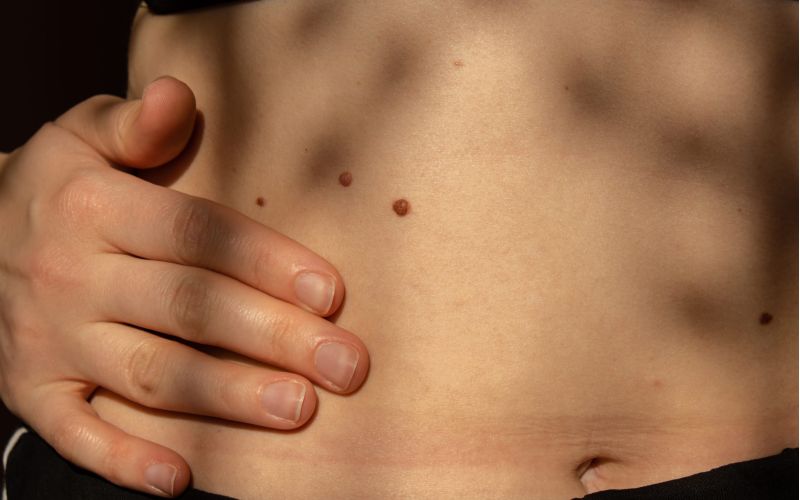
The skin, the largest organ of our body, performs important roles such as protection against external factors, regulation of body temperature and signalling potential health problems. That is why the ability to recognise and monitor various skin lesions is crucial, especially those that may indicate a danger to our health. In this article we discuss the basics of recognising dangerous skin lesions and how to effectively identify symptoms that may suggest the need for urgent medical intervention. We also present various types of skin diseases to give you a more comprehensive understanding of these risks. Recognising the early symptoms of dangerous skin lesions is extremely important, as it increases the chances of effective treatment and a better prognosis.
Table of contents
- What is a skin lesion?
- Types of skin lesions that need attention
- Tips for recognising dangerous skin lesions
- The importance of regular dermatological consultations
- The risk of skin cancer associated with dangerous skin lesions
- Indications for removing dangerous skin lesions
- How to prevent dangerous skin lesions?
- Methods of treating skin lesions at MM Clinic in Wrocław
- Summary
What is a skin lesion?
A skin lesion is a general term referring to any abnormalities, irregularities, injuries or disorders that occur on human skin. These may be various kinds of spots, rashes, eruptions, lumps, growths, moles, ulcers or other changes in the structure, colour or condition of the skin. Skin lesions can have various causes, such as infections, allergies, skin diseases, cuts, sunburn or pathological processes. It is important to consult a doctor in order to accurately diagnose and properly treat any skin lesions, as some of them may require specialist treatment or further assessment.Types of skin lesions that need attention
There are many types of skin lesions that may require medical attention. Here are a few examples. Skin moles - monitor them for changes in shape, size, colour or pain. Self-examination and early detection are key to recognising cancerous lesions. Rash - itching, pain and other symptoms indicate an inflammatory or infectious condition. Consult a doctor for diagnosis and treatment, especially if the rash is persistent, spreading and accompanied by severe symptoms. Nodules are structures raised above the surface of the skin that often appear in various diseases. Granuloma annulare is one example, often occurring in people with diabetes or hyperlipidaemia. Lymphocytoma cutis can appear after insect bites, injury or a tick bite. Pyogenic granuloma, on the other hand, is a single nodule on the skin. Sudden changes in skin colour - spots, discolouration, scars - require attention. Asymmetry and an irregular shape are potential dermatological problems. Consult a doctor about such changes so that they can be assessed and diagnosed, as they may be a sign of serious conditions, e.g. melanoma. Ulcers - slow-healing wounds that require a medical consultation to establish the cause and a treatment plan. Acute skin pain - sudden, intense pain in a specific area of the skin requires a medical consultation for an accurate assessment, to establish the cause and to manage the pain. The causes of such pain can vary, including neuropathic (related to nerve damage) or inflammatory causes.Atypical pigmented moles
Atypical pigmented moles are among the most important skin lesions that deserve particular attention. They are characterised by an irregular shape, different shades and often a larger diameter than typical moles. The diagnostic value of such lesions is increased by the fact that they may carry an elevated risk of developing melanoma, by far the most dangerous skin cancer. That is why every mole with atypical features should be a reason to see a dermatologist. The aim is to confirm or rule out suspected cancerous processes.Unusual lumps on the skin
Unusual lumps on the skin are warning signs that may indicate dangerous skin lesions. Their characteristic features are slow growth and sharp borders; they do not infiltrate tissues or organs, which, however, does not diminish their potential danger. These lesions can take various forms - from plaques and papules to pink-coloured nodules. They can appear on various parts of the body and be a symptom of various skin diseases.Scaly skin lesions
Scaly skin lesions are another form of lesion worth paying attention to. Not only are they unsightly, but they may also indicate more serious health problems. They are often the result of contact allergy, but may also point to diseases of the digestive system or other conditions. These lesions vary in appearance - they often look like red patches that then flake, forming scabs or erosions. Itching accompanying scaly skin lesions may be a sign of serious skin diseases, such as psoriasis. The surface of the dermis may be damaged by skin lesions, which can leave a scar.Blisters and pustules on the skin
Pustules on the skin that contain pus are characteristic of acne. Vesicles with a diameter of more than 1 cm, on the other hand, can occur in various skin diseases. Diseases characterised by vesicles include conditions such as allergic and irritant contact dermatitis, atopic dermatitis, herpes, shingles and scabies. Larger blisters, in turn, can occur in erythema multiforme, pemphigus, pemphigoid, impetigo and porphyria.Slow-healing wounds
Such wounds may be associated with dangerous skin lesions. They may be a symptom of serious health problems, such as inflammation or infection. Regularly monitoring your skin and paying attention to any worrying changes is key to maintaining healthy skin and detecting conditions early. Let us remember that an accurate diagnosis of dangerous skin lesions may require additional diagnostic tests, such as a biopsy.Tips for recognising dangerous skin lesions
When you notice unusual changes on your skin, do not delay - examine your skin yourself and consult a dermatologist, who will carry out a histopathological examination to find out whether it is a malignant lesion.Skin self-examination
Self-examination is the first stage at which skin lesions can be detected, such as skin eruptions, a pigmented mole or a change in existing moles. Checking your own skin is extremely important and allows potentially dangerous skin lesions to be detected early and appropriate action to be taken. Here are a few tips on how to examine your skin yourself: Check your skin regularly, especially the areas most exposed to sunlight, such as the face, arms and legs. Pay attention to any new or unusual skin lesions, such as atypical pigmented moles, lumps or scaly skin lesions. Examine moles and other lesions for asymmetry, irregular borders, variation in colour and changes in the size of the mole. If you notice any worrying symptoms, such as itching, burning or bleeding from the affected area of skin, see a doctor immediately.The importance of regular dermatological consultations
Regular dermatological consultations are key to maintaining healthy skin and detecting dangerous lesions early. A skin examination by a professional can help detect atypical pigmented moles and unusual lumps that may be a sign of more serious conditions. Remember that dermoscopy, a specialist skin examination, can detect individual worrying lesions as well as comprehensively assess the condition of the skin. Regular dermatological consultations are extremely important for people with skin diseases or genetic risk factors (someone in the family has had skin cancer).The risk of skin cancer associated with dangerous skin lesions
Dangerous skin lesions, such as atypical pigmented moles and scaly lesions, may be associated with a risk of developing skin cancer.Impact on health and life
Skin cancer is a serious threat to health and life, especially if dangerous skin lesions are left without appropriate treatment. Prolonged sun exposure, especially in summer, can increase the risk of new lesions appearing on the skin. Frequently observing the skin and recognising worrying symptoms and changes is key to ensuring appropriate treatment and minimising the risk of metastases and complications. Let us not forget that the condition of the skin can be an important indicator of general health, which is why regular dermatological check-ups and protection against the harmful effects of the sun are essential to maintaining healthy skin and avoiding serious consequences.Indications for removing dangerous skin lesions
Dangerous skin lesions may need to be removed to prevent more serious health problems from developing. There are several indications for removing these lesions that are worth knowing. Above all, if a lesion looks suspicious, is asymmetrical or has irregular borders, it is worth consulting a dermatologist. Moreover, if a lesion grows quickly, bleeds, itches or causes pain, you should see a specialist. Skin lesions located in visible places, such as the face, may also be an indication for removal, most often for aesthetic reasons.How to prevent dangerous skin lesions?
To prevent dangerous skin lesions, you should regularly use protection against the harmful effects of the sun, promote a healthy lifestyle and learn about the early detection and recognition of skin lesions.- Use high-SPF sunscreen to protect your skin from harmful solar radiation.
- Avoid sunbathing during the hours of strongest sunshine, i.e. between 11 am and 3 pm.
- Cover your body with suitable clothing, such as long sleeves and trousers.
- Wear sunglasses to protect your eyes from the harmful effects of UV radiation.
- Avoid using sunbeds, as the ultraviolet radiation they emit can cause dangerous skin lesions.
- Remember to apply sunscreen regularly, even on cloudy days. Clouds do not completely block UV radiation.
- Keep your skin moisturised after sun exposure by using body lotions or milks.
- If you plan to spend a long time in the sun, make sure you have suitable shelter, e.g. under an umbrella or in the shade of a tree.